
How to Get Contracted With Insurance Carriers
The short answer
Getting contracted with an insurance carrier ends in an appointment: a filing the carrier makes with your state insurance department registering you as its agent. You cannot file it yourself. You submit a contracting packet, usually through an upline, and each appointment covers one carrier in one state.
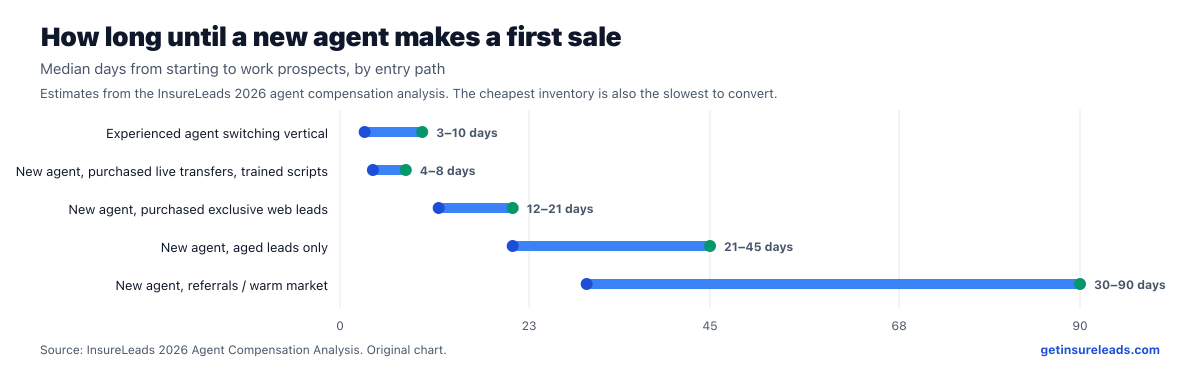
What is a carrier appointment, and how does it differ from your license?
A carrier appointment is a registration, not a contract. The NAIC's State Licensing Handbook defines it in one sentence: "An appointment is a registration with the state insurance department that a producer is acting on behalf of an insurer." The contract you sign with the carrier is a private commercial agreement about money and conduct. The appointment is the public filing that tells your regulator which carriers you may represent. Agents blur the two constantly, then cannot work out why they hold a signed contract and still cannot submit an application.
Section 14 of the NAIC Producer Licensing Model Act (Model #218) states the rule plainly: "An insurance producer shall not act as an agent of an insurer unless the insurance producer becomes an appointed agent of that insurer." The same subsection carries the exemption a lot of commercial brokers rely on — "An insurance producer who is not acting as an agent of an insurer is not required to become appointed." A life, final expense or Medicare career path almost never runs that way; you will be acting as the insurer's agent, so you will need appointments.
Your license and your appointments are separate objects with separate lifecycles. The Handbook's recommended practice for regulators is explicit about it: "Do not require an appointment as a condition of licensure. The PLMA and the ULS provide that a producer can hold a license without holding an active appointment." You can be licensed in twelve states and appointed with nobody. That is the normal condition of a newly licensed agent, and closing that gap is what this chapter covers.
One caveat before you argue with a carrier's licensing desk. Section 14 is an optional provision of the model act, and the drafting note says why: the designation "recognizes that some states do not require the formal appointment of a producer before business can be conducted with an insurer or multiple insurers." Appointment law is state law, and the states diverge by design. The Handbook also notes that the Gramm-Leach-Bliley Act, as modified in 2015, "prohibits any state other than a producer's home state from imposing any appointment requirements upon a member of NARAB" — a carve-out that matters only if you are a NARAB member.
Who files the appointment, and why you cannot file your own
The carrier files it. Model #218 §14B puts the duty on the insurer: "To appoint a producer as its agent, the appointing insurer shall file, in a format approved by the insurance commissioner, a notice of appointment within fifteen (15) days from the date the agency contract is executed or the first insurance application is submitted." None of that is yours to execute. You cannot pay a fee and appoint yourself, and an upline cannot appoint you either — an upline can only put your paperwork in front of a carrier that will.
The carrier also pays. Section 14D: "An insurer shall pay an appointment fee ... for each insurance producer appointed by the insurer," and §14E adds a renewal appointment fee in states that charge one. NIPR publishes electronic company appointment renewal windows for a defined set of jurisdictions — Alabama, Illinois, Massachusetts, Rhode Island and Wisconsin among them — where the carrier is invoiced to keep an appointment alive. Every appointment held on you is a recurring line on somebody else's budget. That is the honest economic reason carriers and uplines lose enthusiasm for agents who never submit a case, and it is worth understanding before you read a slow contracting process as a personal insult.
Mechanically the filing runs through NIPR, which describes submitting "appointments and terminations seamlessly" and using "the National Producer Number (NPN) for real-time validation and compliance with state requirements," either in its own application or through a carrier system wired into it. Two consequences for you: your NPN, not your name, is the key the whole chain turns on, so a name or address mismatch stalls a filing that is otherwise fine; and your appointment status lives in a state-fed database rather than in a recruiter's assurance that "you're all set."
| Step | Who acts | Basis |
|---|---|---|
| Submit the contracting packet | You (usually via an upline that forwards it) | Carrier onboarding practice, not statute |
| Execute the agency contract | You and the carrier | Private agreement |
| File the notice of appointment with the state | The appointing insurer | Model #218 §14B — "the appointing insurer shall file" |
| Pay the appointment fee, and any renewal fee | The insurer | Model #218 §14D, §14E |
| Verify you are eligible for appointment | The insurance commissioner | Model #218 §14C (optional) — not to exceed 30 days |
| Transmit the filing electronically | The insurer, through NIPR, keyed to your NPN | NIPR appointments and terminations processing |
| Report a termination | The insurer, within 30 days | Model #218 §15A |
Just-in-time or pre-appointment: which model your carrier uses changes your first week
Read §14B's clock again and notice the "or": the fifteen days run from "the date the agency contract is executed or the first insurance application is submitted." Those two alternative triggers are where the industry's two operating models come from. Under pre-appointment, the carrier files when your contract is executed, before you have written anything. Under a just-in-time appointment, the carrier holds the filing until your first application arrives, then files against the second trigger.
Practically, just-in-time means you can hold a signed contract, an agent number and a stack of product training and still not appear as appointed in the state record, because nothing has triggered the filing yet. That is not a red flag by itself. It becomes a problem only where state law requires the appointment to exist before you solicit — and since Section 14 is optional in the model act, that is precisely the point where states differ. Before you dial in a new state, ask the carrier's licensing desk in writing which trigger it uses there.
One element is uniform enough to plan around. The Handbook's uniform appointment process states that "States shall allow insurers to select the effective date of the initial appointment." The carrier chooses the effective date, which is exactly why a just-in-time filing can still cover the case that triggered it.
| Pre-appointment | Just-in-time (JIT) | |
|---|---|---|
| Trigger for the filing | The agency contract is executed | Your first insurance application is submitted |
| When the state record shows you appointed | Before you write any business | After the first case reaches the carrier |
| What the carrier pays for | A state fee for every contracted agent | A state fee only for agents who produce |
| What you should verify | That the filing exists in every state you intend to solicit in | That your state permits filing after the first application, and which effective date the carrier will use |
| Typical new-agent failure mode | A slow start while fees and filings batch | Believing you are appointed when the record says otherwise |
What the contracting packet actually asks for
The packet is a compliance file, not an audition. Every item in it exists because the carrier has to answer to a regulator for what you do with its paper, and the licensing desk processing it has no discretion to like you. Assemble it once, keep it in a folder, and re-submit the same clean set to each carrier.
Two habits shorten the process more than anything else. Have the E&O certificate and every non-resident license in hand before you request contracts, and make the name, address and NPN identical on every document, because that trio is what gets validated against the state record.
- Your NPN and resident license — the identifier the appointment is validated against, so a mismatch stalls an otherwise complete filing.
- Every state license and line of authority you hold — appointments are filed per state, so the packet asks for the full set, not just your home state.
- A current E&O certificate showing limits and dates — the single most common reason a new agent's packet sits unworked.
- W-9, and for an entity contract its EIN plus a designated responsible producer — the Handbook notes a business entity must "designate a licensed producer responsible for the BE's compliance with the insurance laws."
- Signed authorization for background and credit reporting — you are consenting to the check, not certifying that you will pass it.
- An AML training certificate — 31 CFR § 1025.210 requires an insurer's anti-money-laundering program to include "integrating the company's insurance agents and insurance brokers into its anti-money laundering program," which is why the certificate is a gate rather than a suggestion.
- Line-specific certification where the product demands it — for Medicare Advantage that means the annual AHIP certification carriers check before releasing writing numbers.
- The hierarchy or assignment page — the one sheet in the packet that decides who receives override on your business.
- Direct-deposit authorization and, where offered, your election between advanced and as-earned commission.
Background, credit, and the record that follows you between carriers
Contracting is the moment a carrier decides how much of your history it is willing to own. That is why the questions read like a license application: criminal matters, regulatory actions, unresolved judgments, bankruptcies, unpaid balances owed to another carrier. Disclose all of it. A disclosed problem is a underwriting decision; an omitted one is a misrepresentation, and misrepresentation is the category that ends contracts badly.
Understand what "badly" means here, because most new agents do not. A for-cause exit is not a private commercial disagreement. Model #218 §15A requires an insurer that terminates a producer for one of the Section 12 reasons to "notify the insurance commissioner within thirty (30) days following the effective date of the termination," and to hand over supporting documents on request. Section 15D(1) then requires the insurer to mail you a copy of that notification within fifteen days — by certified mail where the termination was for cause. The Handbook confirms the same machinery: for-cause terminations require a detailed report to the state, a copy to the producer, and the reports are treated as confidential, with good-faith reporting immunity granted to the insurer.
There is a right of reply almost nobody uses. Section 15D(2) gives the producer thirty days after receiving the notification to "file written comments concerning the substance of the notification" with the commissioner, copied to the reporting insurer. If a termination report about you is wrong, that window is the mechanism for saying so on the record. Read the envelope when it arrives instead of filing it unopened.
One quieter risk: the Handbook's recommended practice for regulators is to "automatically terminate appointments if a license goes inactive for any reason." Miss a CE deadline or a license renewal and you do not merely lose the license — the appointments attached to it fall away too, and each one has to be re-filed by each carrier. The state-by-state license and CE requirements are the maintenance schedule for everything in this chapter.
How long does carrier contracting take?
There is no honest single number, and we are not going to invent one — turnaround varies by carrier, by state, by whether an upline is batching submissions, and by how clean your packet is. What is fixed is the regulatory leg. Section 14B gives the insurer fifteen days from its trigger to file. Where the optional §14C is adopted, the commissioner "shall verify within a reasonable time not to exceed thirty (30) days that the insurance producer is eligible for appointment," and must notify the insurer "within five (5) days" if you are found ineligible. So the state side carries a stated ceiling. The carrier-side review that precedes it carries none.
Which means the delay you experience is almost always sitting inside the carrier or the upline, and almost always on one of four items: a missing or expired E&O certificate, a name or address that does not match the state record, an incomplete certification for the line you want to write, or an unsigned hierarchy page. None of those get resolved by following up politely once a week; they get resolved by asking which specific document is outstanding.
Budget for the wait rather than being surprised by it. In our compensation analysis, which combines public data with structured interviews with 40+ active producers conducted January to March 2026, 51% of those producers named time spent on licensing, E&O and AHIP or carrier certifications among their operational pain points — it ranked fourth on a ten-item list. Treat contracting as a project that runs in parallel with everything else in the wider route to market for a new agent, not as a gate you sit and wait behind.
Why appointments multiply: one per carrier, per state
The unit of an appointment is producer × company × state. The Handbook's uniform process says states "shall require only one appointment or termination form or transaction per producer per company," and its best-practice list narrows it further: "Require only one appointment or termination form or transaction for each company for each producer per state." The good news is that one appointment covers every product you sell for that company in that state. The arithmetic is still unforgiving: eight carriers across six states is up to forty-eight live registrations, each carrying a fee the carrier pays, and in renewal states pays again.
Two things follow. First, non-resident licensing comes before contracting, not after — an appointment presupposes a live license in that state, which is why regulators are advised to drop appointments automatically when a license goes inactive. Second, keep a written matrix of carrier, state, appointment status and effective date, because no one else maintains it for you and every carrier sees only its own row. A spreadsheet does the job; so does the free single-user CRM if you would rather keep it next to your pipeline.
That matrix is also what should govern your lead buying, and this is where new agents waste real money. Our own new-agent guidance flags leads bought without carrier-appointment alignment as pure waste: a prospect in a state where you hold no appointment is a conversation you cannot close. Filter by the states you are actually appointed in, and start with inventory priced for someone with no book yet — aged records you can filter down to a handful of states run $3 for 30 to 90 day final expense data, against $50 for the same vertical fresh and exclusive. While contracts are pending, cheap data in appointed states beats expensive data you cannot legally write.
What a captive contract changes versus an independent one
The appointment mechanics are identical either way — the carrier still files, still pays, still owns the trigger. What changes is how many of these filings you are permitted to hold and what happens to them when you leave.
A captive contract restricts which carriers you may represent, so your appointment set is largely chosen for you and is tied to the relationship. End the relationship and the terminations get filed; your next carrier set is built from scratch elsewhere. In exchange, the captive side normally supplies the training, the office structure and often the prospects, which is a real transfer of cost away from an agent with no capital. An independent contract lets you hold appointments with several carriers at once and add one without anyone's permission, and hands you the entire administrative and financial burden of doing so — E&O, non-resident licenses, certification renewals, and the matrix from the previous section.
Read for the clauses below rather than for the commission percentage on the front page. Rate mechanics are a separate subject with its own moving parts, and we keep them in one place: how contract levels and commission percentages are actually structured covers the level ladder, advances and where the spread goes. This page stays on the process.
- Exclusivity scope — which carriers, which product lines, and whether it survives termination.
- Release policy — whether you can move a carrier appointment to a different upline, and how long the carrier makes you wait.
- Vesting of renewals — whether trail commission survives your departure, and after how long.
- Ownership of the book and the data — who keeps the client list, and who keeps the leads you paid for.
- Advance and debit-balance terms — how chargebacks are recovered, and what happens to an unpaid balance if you leave.
- Assignment of commissions — who is named to receive payment, and whether that is you or an entity above you.
- Non-solicit and non-compete language — scope, duration, and whether it applies to clients, to agents, or to both.
Most new agents get appointed through an upline, and that decides who sits above the contract
Say the uncomfortable part plainly: carrier licensing desks are built to process packets arriving from distributors, not to onboard an individual with zero production history. A handful of carriers will contract you directly; most of the senior-market and final expense field will route you through an IMO, FMO or agency that submits your packet and appears on the hierarchy page. That is the normal path, not a scam, and pretending otherwise would be dishonest.
What the upline owns is narrower than recruiting language implies. The contract is still between you and the carrier, and the appointment is filed against your NPN, in your name, in each state — an upline cannot hold your appointment and cannot appoint you. What it holds is its position above you in the hierarchy and the override that flows from that position, plus, in most agreements, the release policy that governs whether you can move a given carrier elsewhere and how long you must stop writing to do it. Ask about the release policy before you sign the hierarchy page, because that is the term you will care about in year two and the one that is hardest to renegotiate later.
This is also the part of the market with the least transparency: in the same compensation analysis, 31% of producers interviewed named FMO or IMO override opacity among their pain points. We take no referral, sponsorship or affiliate money from any IMO and publish no "best IMO" ranking, which is why this section describes structure instead of naming favourites. What an IMO is and where it sits in the chain between you and the carrier is the next chapter to read, and it is the one that explains what you are actually agreeing to on the hierarchy page.
Frequently asked questions
Do I need a carrier appointment to sell insurance?
If you are acting as an agent of that insurer, yes. NAIC Model #218 §14A states that "an insurance producer shall not act as an agent of an insurer unless the insurance producer becomes an appointed agent of that insurer," while a producer not acting as an insurer's agent is not required to be appointed. Section 14 is an optional provision, so your state's statute is the final word.
Can I appoint myself with a carrier?
No. Model #218 §14B places the filing on "the appointing insurer," which must file the notice of appointment within fifteen days of its trigger, and §14D requires the insurer to pay the appointment fee for each producer it appoints. You submit a contracting packet; the carrier files the appointment.
What is a just-in-time appointment?
It is the carrier filing your appointment after your first application rather than when your contract is signed — the second of the two triggers in §14B. It saves the carrier a state fee on agents who never produce. It is not available everywhere, so confirm with the carrier's licensing desk which trigger applies in each state you intend to solicit in.
How long does it take to get contracted with a carrier?
No reliable single figure exists, and any vendor quoting one is guessing. The law fixes only parts of it: fifteen days for the insurer to file after its trigger, and where §14C is adopted, eligibility verification "not to exceed thirty (30) days" plus a five-day notice if you are ineligible. Real delays are usually a missing E&O certificate, a name mismatch against the state record, or an incomplete certification.
Do I need a separate appointment for every state?
Yes. The NAIC State Licensing Handbook's best practice is one appointment form or transaction "for each company for each producer per state." One appointment covers every product you write for that carrier in that state, but a second state means a second filing — and a live license in that state first.
Do carrier appointments expire?
In some jurisdictions they renew. NIPR publishes electronic company appointment renewal windows for a defined set of jurisdictions, including Alabama, Illinois, Massachusetts, Rhode Island and Wisconsin, where the carrier is invoiced to keep the appointment active. Separately, the Handbook advises regulators to "automatically terminate appointments if a license goes inactive for any reason," so a lapsed license takes your appointments with it.
If a carrier terminates me, does it show up anywhere?
For a for-cause termination, yes. Model #218 §15A requires the insurer to notify the insurance commissioner within thirty days of the effective date, and §15D(1) requires it to mail you a copy of that notification within fifteen days. Section 15D(2) then gives you thirty days from receipt to file written comments on the substance with the commissioner — a right of reply most agents never use.
Can a new agent get appointed without going through an IMO or FMO?
With some carriers, yes; with much of the senior-market field, not realistically in year one, because those licensing desks process packets from distributors rather than onboarding unproduced individuals. Either way the appointment is filed against your own NPN. What the upline holds is its hierarchy position and the release policy, not your appointment.
Sources
- https://content.naic.org/sites/default/files/model-law-218.pdf — NAIC Producer Licensing Model Act (#218): §14A appointment requirement and the not-acting-as-agent exemption; §14B the insurer files the notice of appointment within 15 days from contract execution or first application (the legal basis for pre-appointment vs just-in-time); §14C optional 30-day eligibility verification and 5-day ineligibility notice; §14D/§14E insurer pays appointment and renewal fees; drafting note that §14 is optional because some states do not require formal appointment; §15A 30-day for-cause termination reporting; §15D(1) copy to producer within 15 days by certified mail; §15D(2) producer's 30-day right to file written comments with the commissioner.
- https://content.naic.org/sites/default/files/inline-files/Chapters%2011-15.pdf — NAIC State Licensing Handbook, Chapter 11 (Appointments): definition of an appointment as a registration with the state insurance department; GLBA as modified in 2015 barring non-home states from imposing appointment requirements on NARAB members; 2002 uniform appointment process elements (electronic filing, insurer selects the initial effective date, one appointment/termination transaction per producer per company); recommended practices (do not require an appointment as a condition of licensure, automatically terminate appointments if a license goes inactive, one transaction per company per producer per state); for-cause termination documentation and confidentiality. Chapter 12 supplies the business-entity designated-responsible-producer requirement.
- https://nipr.com/Processing/Appointments/Terminations — Appointments and terminations are submitted electronically through NIPR or a carrier system wired into it, using the National Producer Number (NPN) for real-time validation and compliance with state requirements; fees vary by method.
- https://nipr.com/products-and-services/nipr-gateway/appointment-renewals — Some jurisdictions renew company appointments, with NIPR publishing renewal windows and carriers invoiced to keep appointments active — Alabama, Illinois, Massachusetts, Rhode Island and Wisconsin are among the jurisdictions listed. (Two fetches of this page returned inconsistent jurisdiction counts, so no count is printed on the page — only named jurisdictions that appeared in both.)
- https://nipr.com/help/product-definitions — NIPR product definitions confirming the Producer Database (PDB) subscription/reporting service and NPN-based validation used in appointment processing.
- https://www.law.cornell.edu/cfr/text/31/1025.210 — 31 CFR § 1025.210 requires an insurance company's written anti-money-laundering program to include "integrating the company's insurance agents and insurance brokers into its anti-money laundering program" — the reason an AML training certificate is a standing contracting-packet item.