
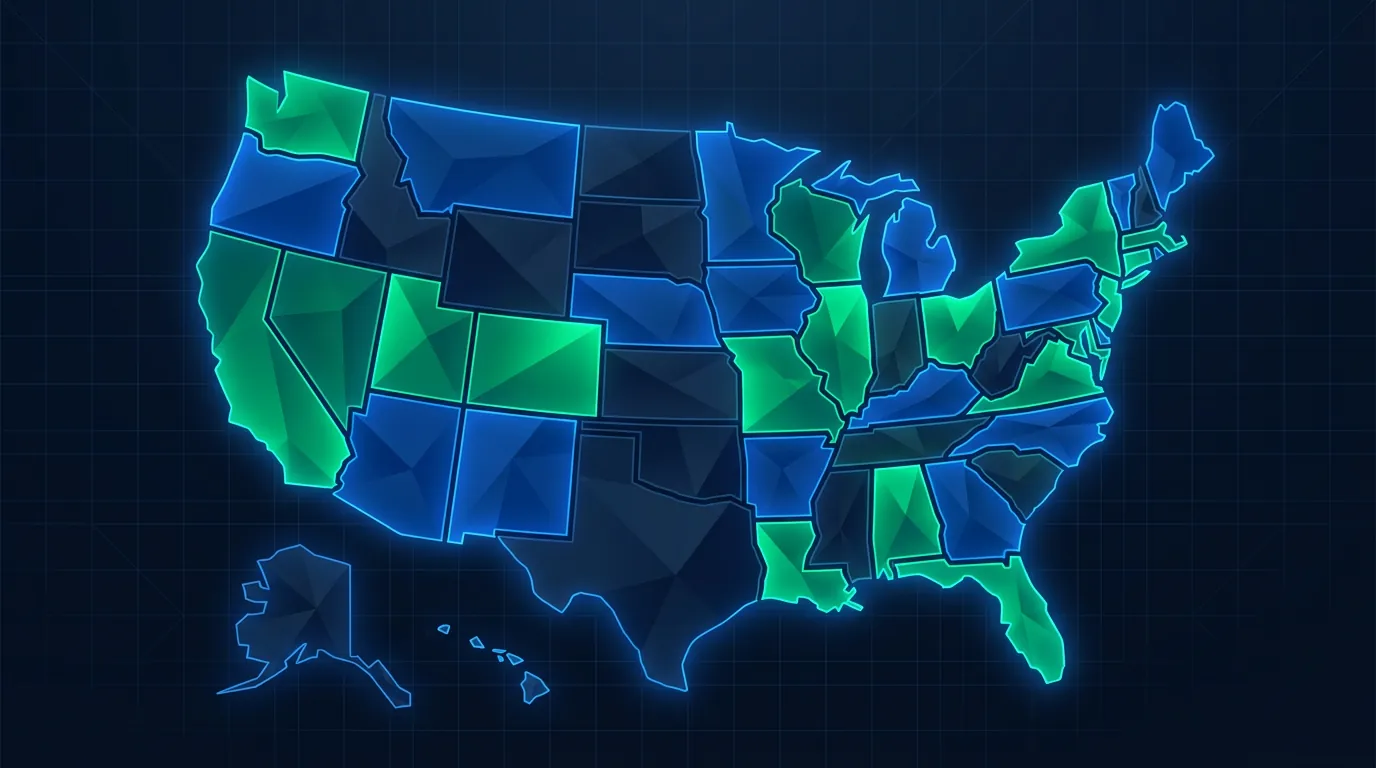
Unlike banking, securities, or most other financial services, insurance is regulated primarily at the state level. Each of the 50 states, the District of Columbia, and U.S. territories maintains its own insurance department with independent authority over agent licensing, product approval, rate regulation, marketing rules, and consumer protection. For insurance agents and agencies that purchase leads and sell across multiple states, understanding this regulatory patchwork is essential to staying compliant and avoiding costly penalties.
This guide provides a comprehensive overview of insurance regulations by state as they relate to lead buying, contacting prospects, and selling insurance products in 2026.
Overview of State-Level Insurance Regulation
The state-based regulatory system for insurance dates back to the McCarran-Ferguson Act of 1945, which expressly reserved insurance regulation to the states. The National Association of Insurance Commissioners (NAIC) serves as the coordinating body between state regulators, developing model laws and regulations that states can adopt. However, adoption is voluntary, and each state may modify or decline any model provision.
Key aspects of insurance that are regulated at the state level include:
- Agent and broker licensing: Requirements for obtaining and renewing an insurance license, including examination, background checks, and continuing education.
- Product approval: Insurers must file their policy forms and, in many states, their rates with the state insurance department before selling them.
- Rate regulation: Some states use prior approval (rates must be approved before use), while others use file-and-use or use-and-file systems.
- Market conduct: Rules governing how agents interact with consumers, including advertising, sales practices, claims handling, and complaint resolution.
- Consumer protection: Statutes addressing unfair trade practices, anti-rebating, anti-twisting, and suitability standards.
For lead buyers, this means that the rules governing how you contact a prospect, what you can say, what disclosures are required, and even which products you can sell vary depending on the consumer's state of residence.
How Regulations Affect Lead Buying and Sales
When you purchase an insurance lead, you are buying the opportunity to contact and sell to a consumer in a specific state. Several regulatory domains directly affect this process:
Licensing Requirement
You must hold a valid insurance license in the consumer's state to sell insurance there. Selling without a license — even if the consumer contacted you first — is a serious violation that can result in fines, license revocation, and criminal penalties. If you purchase leads in a state where you are not licensed, you are wasting money and exposing yourself to regulatory risk.
Product Availability
Not all insurance products are available in all states. Product forms and riders must be approved by each state's insurance department. A Medicare Supplement plan available in Texas may have different benefits or pricing in New York due to state mandates. Verify that the specific products you sell are approved in each state where you buy leads.
Telemarketing and Contact Rules
Beyond federal TCPA requirements, many states have additional telemarketing laws that restrict calling hours, require specific disclosures at the start of calls, mandate different consent standards, or impose registration and bonding requirements for telemarketers. The USA.gov portal provides links to each state's consumer protection and telemarketing resources.
Advertising and Marketing
State insurance departments regulate advertising, and what constitutes "advertising" is defined broadly in most states. If you send an email, text, or direct mail piece to a lead, it may be considered advertising subject to state-specific content requirements and pre-approval rules.
State Licensing Requirements for Insurance Agents
Every state requires insurance agents to pass a licensing examination, complete a background check, and register with the state insurance department. However, the specific requirements vary:
Resident vs. Non-Resident Licenses
Your home state issues your resident license. To sell in other states, you apply for non-resident licenses. Most states grant non-resident licenses on a reciprocal basis through the NAIC's NIPR (National Insurance Producer Registry) system, which streamlines multi-state licensing. You can apply for non-resident licenses in most states online through the NIPR portal.
License Lines of Authority
Insurance licenses are issued by "line of authority" — life, health, property, casualty, and various specialty lines. When buying leads for a specific product, ensure your license in the consumer's state covers that line of authority. Holding a life license does not authorize you to sell property insurance, and vice versa.
Background Check and Fingerprinting
Most states require criminal background checks and fingerprinting for initial license applications. States vary on whether they accept previous background checks from other states or require new ones. Felony convictions, certain misdemeanors, and financial crimes can disqualify applicants in many states.
State-Specific Examination Requirements
While most states use standardized exams (typically administered by Prometric or Pearson VUE), some states add state-specific modules covering their particular regulations. A few states maintain entirely unique exams. Study materials and practice tests are available through state insurance department websites and approved education providers.
Continuing Education by State
Every state requires licensed agents to complete continuing education (CE) credits to maintain their licenses. The requirements range from 20 to 40 hours per renewal cycle (typically every two years), with many states requiring specific coursework in ethics, regulatory updates, or product-specific topics.
Key variations across states:
- Hours required: Range from 20 hours (e.g., Ohio) to 40+ hours (e.g., Kansas) per renewal period.
- Ethics requirements: Most states require 3-4 hours of ethics CE per cycle, but some require more.
- State-specific topics: Some states mandate CE on state-specific regulations, flood insurance (coastal states), or long-term care (e.g., California).
- Reciprocity: Non-resident renewal typically requires meeting the CE requirements of your resident state only, though some states have additional requirements.
- Delivery method: Most states accept online, self-study, and classroom CE. A few require a minimum number of classroom hours.
Falling behind on CE can result in license suspension or lapse. If your license lapses in a state where you are actively buying leads, you must immediately stop calling those leads until the license is reinstated.
State Insurance Department Resources
Each state's department of insurance is the definitive source for regulatory requirements affecting insurance agents. These departments publish licensing requirements, regulation updates, enforcement actions, consumer complaint data, and market conduct examination reports.
Resources for navigating state departments:
- NAIC State Map: The NAIC website provides direct links to every state insurance department, along with summaries of key regulations and model law adoption status.
- NIPR (National Insurance Producer Registry): The primary portal for managing multi-state license applications and renewals. Most state licensing transactions can be completed through NIPR.
- SERFF (System for Electronic Rate and Form Filing): While primarily used by carriers, agents can access SERFF to verify that specific products have been filed and approved in their states.
- State consumer protection offices: Through USA.gov, you can find each state's consumer protection division, which often oversees telemarketing registration and enforcement.
Key Regulatory Differences Between States
For lead buyers, understanding the most impactful regulatory differences helps you develop compliant, effective sales strategies across states:
Rate Regulation Approaches
States use different approaches to regulating insurance rates, with direct implications for what products and pricing you can offer:
- Prior approval states: Insurers must submit rates to the state and receive approval before using them. Changes take time, and approved rates may differ from what the carrier offers in other states. Examples: New York, Florida, Texas.
- File-and-use states: Insurers file rates with the state and can begin using them immediately, though the state can disapprove them after the fact. This allows faster rate adjustments.
- Use-and-file states: Insurers can begin using rates and file them afterward within a specified timeframe. The most flexible regulatory approach.
- No-file states: A few states do not require rate filings for certain lines, relying on competition to regulate pricing.
Community Rating vs. Attained-Age Rating
In health and Medicare Supplement insurance, states differ on whether insurers can price based on the consumer's current age (attained-age), age at issue (issue-age), or must charge the same rate regardless of age (community rating). This significantly affects pricing and competitiveness in different states. According to the U.S. Census Bureau, states with older median populations may see higher premium variance under attained-age rating systems.
Guaranteed Issue Requirements
Some states require guaranteed issue of certain insurance products (particularly Medicare Supplement plans) regardless of health status, while others allow medical underwriting after the initial enrollment window. This affects conversion rates because guaranteed-issue leads have a higher close probability since health status is not a barrier.
Anti-Rebating and Anti-Inducement Laws
Most states prohibit agents from offering rebates, gifts, or other inducements to persuade consumers to purchase insurance. However, the specifics vary: some states set dollar thresholds for permissible gifts, others prohibit any form of inducement, and a few (like California and Florida) have modernized their anti-rebating statutes to allow certain value-added services.
Multi-State Compliance Strategies
If you buy leads and sell insurance across multiple states, implement these compliance strategies:
- Maintain a licensing matrix: Create and regularly update a spreadsheet tracking your license status, expiration dates, CE deadlines, and lines of authority for every state where you are active.
- Default to the stricter standard: When in doubt, apply the most restrictive state's rules to all your operations. This reduces the risk of inadvertent violations when operating across jurisdictions.
- Work with a compliance officer or consultant: Agencies selling in 10+ states should consider dedicated compliance staff or an external compliance consultant who monitors regulatory changes across your active states.
- Configure your CRM for state-specific rules: Set up your CRM to apply state-specific calling hours, disclosure scripts, and follow-up cadences based on the consumer's state.
- Purchase leads only in licensed states: It sounds obvious, but it is a common mistake — especially in fast-growing agencies. Configure your lead provider to deliver leads only in states where you hold active licenses.
- Monitor regulatory updates: Subscribe to NAIC regulatory alerts and join your state-level agent associations for timely updates on regulatory changes.
State-Level Telemarketing and Lead Contact Rules
Beyond federal TCPA requirements, many states impose additional restrictions on telemarketing that directly affect how you can contact purchased leads:
- State DNC registries: States including Indiana, Pennsylvania, Colorado, and others maintain their own DNC lists that you must scrub against in addition to the federal registry.
- Restricted calling hours: While the federal standard is 8 AM to 9 PM in the consumer's time zone, some states narrow this window further. A few states restrict weekend calling for certain product types.
- Disclosure requirements: Certain states require specific verbal disclosures at the start of a sales call, including your name, the company you represent, the purpose of the call, and that you are licensed in the consumer's state.
- Telemarketer registration: Some states require telemarketing entities to register and post a bond before making outbound calls to residents. This may apply to insurance agencies depending on the state's definition of telemarketer and applicable exemptions.
- Consent standards: A few states have consent requirements that exceed the federal TCPA standard, particularly for automated calls and text messages.
Failure to comply with state-specific telemarketing laws exposes your agency to state-level enforcement actions, which can include fines, license suspension, and civil lawsuits by the state attorney general.
Compliance Checklist for Multi-State Agents
Use this checklist to verify and maintain compliance across all states where you purchase leads and sell insurance:
- Verify that you hold an active license with the correct lines of authority in every state where you purchase leads.
- Monitor license renewal dates and CE deadlines. Set reminders 90 days before expiration.
- Complete all required continuing education credits before renewal deadlines, including state-specific mandatory topics.
- Scrub all lead lists against both the federal National DNC Registry and any applicable state DNC registries.
- Apply state-specific calling hour restrictions in your dialer configuration.
- Ensure your call scripts include all state-required disclosures for the consumer's state.
- Verify that the insurance products you discuss are approved and available in the consumer's state.
- Comply with state-specific advertising rules for any emails, texts, or direct mail sent to leads.
- Register as a telemarketer in states that require it, and maintain any required bonds.
- Maintain documentation of all compliance activities, including scrub records, script approvals, and training logs.
- Review and update compliance procedures at least quarterly as regulations evolve.
- Consult with your lead provider to confirm that lead generation practices comply with regulations in every state where leads are delivered.
How Do State Insurance Regulations Compare? Detailed Breakdown
The regulatory landscape varies dramatically across states, affecting licensing complexity, continuing education burden, and compliance requirements for agents buying leads. The NAIC tracks these differences, and the table below highlights key states that insurance lead buyers operate in most frequently:
| State | License Requirement | CE Hours Required | Key Regulation | Notes |
|---|---|---|---|---|
| California | Exam + background check + fingerprints | 24 hrs / 2 years (incl. 3 hrs ethics) | Strict anti-rebating; mandatory LTC CE; CDI market conduct audits | Telemarketer registration required; state DNC list enforced by AG |
| Florida | Exam + background check + fingerprints | 24 hrs / 2 years (incl. 3 hrs ethics, 5 hrs law) | Prior approval rate regulation; Citizens Insurance market of last resort | Carrier market exits create high lead demand; aggressive TCPA enforcement |
| Texas | Exam + background check + fingerprints | 24 hrs / 2 years (incl. 2 hrs ethics) | File-and-use rate system; TDI market conduct oversight | Large market with high lead volume; state-specific disclosure requirements |
| New York | Exam + background check + fingerprints; separate broker license available | 15 hrs / 2 years (incl. 1 hr ethics) | Prior approval for rates and forms; community rating for health; DFS enforcement | Most regulated state; strict advertising pre-approval; consumer protection emphasis |
| Ohio | Exam + background check | 20 hrs / 2 years (incl. 3 hrs ethics) | Competitive rate regulation; ODI oversight | Lower regulatory burden; no state DNC registry; agent-friendly environment |
| Washington | Exam + background check + fingerprints | 24 hrs / 2 years (incl. 3 hrs ethics) | Enhanced TCPA-parallel state telemarketing laws; OIC enforcement | State consent requirements exceed federal TCPA standard for automated calls |
What Are the Most Strict States for Insurance Lead Regulations?
New York, California, and Washington consistently rank as the most heavily regulated states for insurance lead buying and agent conduct. New York's Department of Financial Services (DFS) requires prior approval of rates, policy forms, and advertising materials, and enforces community rating for health insurance — meaning agents must navigate a complex compliance landscape before contacting any lead in the state. California's Department of Insurance (CDI) mandates telemarketer registration, enforces its own state DNC registry through the attorney general's office, and has modernized its anti-rebating statutes with strict thresholds. Washington state has enacted telemarketing consent requirements that exceed the federal TCPA standard, particularly for automated calls and text messages. Agents purchasing leads in these states through providers like InsureLeads should verify that all lead capture forms meet the strictest applicable consent standard and that state-specific disclosure scripts are loaded into their CRM dialers.
How Do State Regulations Affect Insurance Lead Buying?
State regulations directly impact every aspect of the insurance lead buying process — from which leads you can legally purchase to how and when you can contact them. First, you can only buy leads in states where you hold an active license with the correct lines of authority; purchasing leads in unlicensed states wastes budget and creates regulatory exposure. Second, state-specific telemarketing rules affect calling hours, required verbal disclosures, and consent standards — some states narrow the federal 8 AM-9 PM window or require registration and bonding before outbound calling begins. Third, advertising rules vary: emails, texts, and even voicemails sent to leads may constitute "advertising" subject to state content requirements in markets like New York and California. The FTC and FCC enforce the federal baseline, but state attorneys general pursue additional enforcement under their own statutes. Configuring your CRM to apply state-specific rules to each lead based on the consumer's location is essential for compliant multi-state operations.
State-level insurance regulation is complex, but it is navigable with proper planning and attention to detail. By building compliance into your operational framework from the start — rather than treating it as an afterthought — you protect your licenses, avoid costly penalties, and build the trust that consumers and regulators expect from professional insurance agents.