
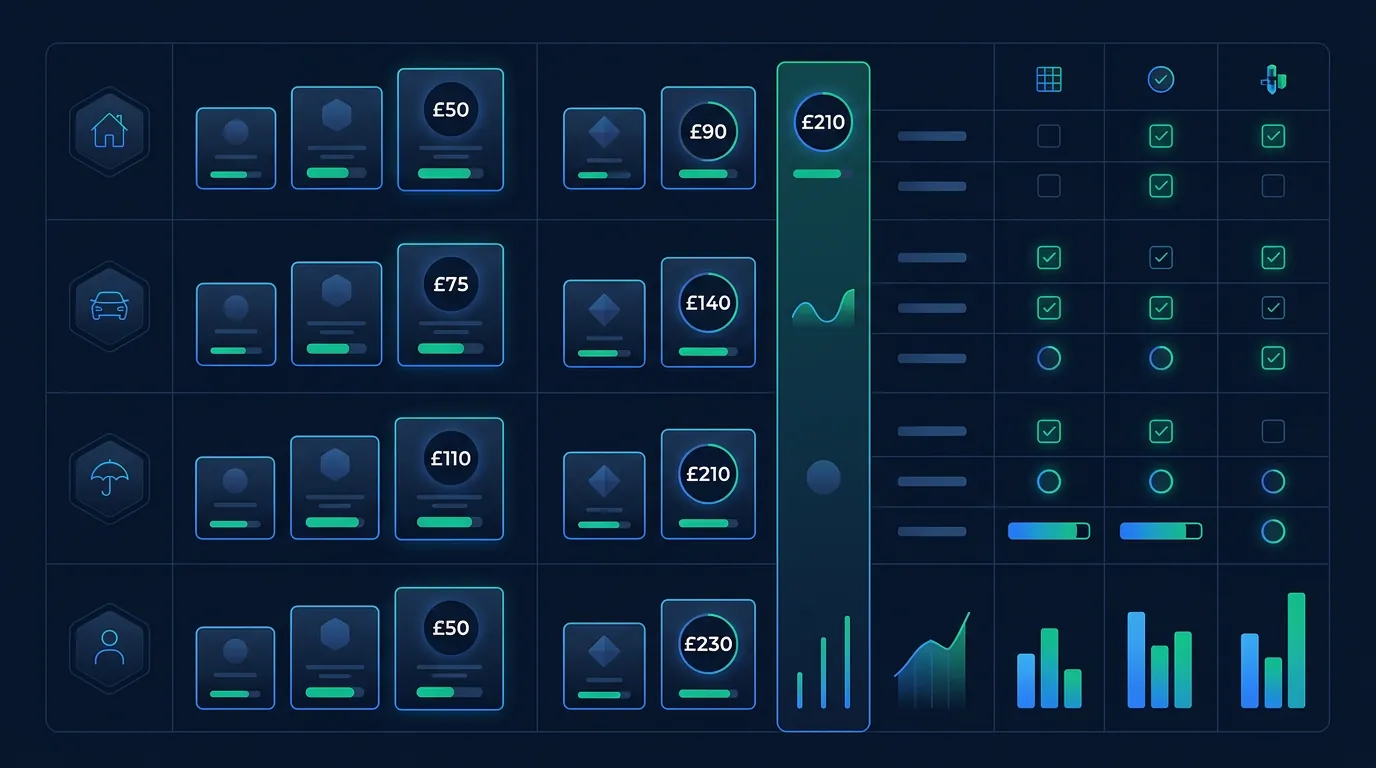
Insurance leads cost roughly $0.25 for a deep-aged record up to $300 for an interest-verified annuity live transfer, with real-time exclusive web leads landing between $35 and $125 per lead. Where you fall depends on vertical — auto and ACA are cheapest, IUL and Medicare the priciest — plus exclusivity, geographic targeting, and season.
Understanding insurance leads cost per lead across every vertical helps you budget effectively and identify which providers offer fair pricing. Here is a complete 2026 pricing breakdown by insurance type and lead format.
Cost Overview by Vertical and Lead Type
Medicare Leads
- Aged Leads: $0.75-$5.00 per lead by age band
- Exclusive Web Leads: $70 per lead
- Live Transfers: $125 per interest-verified connected call
Medicare leads are among the most expensive due to the high lifetime value of Medicare clients and intense competition during AEP. Year-round and T65 leads tend to be 20-30% cheaper than AEP leads.
Final Expense Leads
- Aged Leads: $0.50-$3.00 per lead by age band
- Exclusive Web Leads: $50 per lead
- Live Transfers: $110 per interest-verified connected call; $250 (Guaranteed Issue) / $300 (Level-Graded) for the separately-priced pre-vetted, partially-underwritten tier
- Direct Mail Leads: $25-$50 per response
- Facebook Leads: $15-$30 per lead
Final expense leads are moderately priced. The wide range in final expense lead pricing reflects the diversity of lead sources and quality levels available. Price is only half of that comparison at this end of the market: which final expense lead companies publish a price at all decides whether two quotes are comparable in the first place.
Life Insurance Leads
- Aged Leads: $0.60-$4.00 per lead by age band
- Exclusive Web Leads: $65 per lead
- Live Transfers: $160 per interest-verified connected call
Life insurance lead costs vary significantly based on the coverage amount range and policy type targeted. High-coverage ($500K+) leads command premium pricing. If life is your main line, our breakdown of how much life insurance leads cost splits the same spend across term, whole and universal life so you can budget by product rather than by a blended average.
IUL Leads
- Aged Leads: $2.00-$12.00 per lead by age band
- Exclusive Web Leads: $125 per lead
- Pre-Set Appointments: $400 confirmed / $500 kept
IUL leads are the most expensive insurance leads per unit, reflecting the high-net-worth target demographic and the substantial commission potential per policy ($3,000-$10,000+).
Auto Insurance Leads
- Aged Leads: $0.25-$2.00 per lead by age band
- Exclusive Web Leads: $35 per lead
- Live Transfers: $90 per interest-verified connected call
Auto leads are generally the most affordable per unit. The lower policy value means providers and agents accept lower per-lead pricing, but volume makes up the difference.
ACA / Health Insurance Leads
- Aged Leads: $0.50-$3.50 per lead by age band
- Exclusive Web Leads: $45 per lead
- Live Transfers: $100 per interest-verified connected call
Health insurance lead pricing is heavily seasonal. OEP (November-January) pricing peaks, while SEP year-round leads cost 20-30% less.
Home Insurance Leads
- Aged Leads: $0.30-$2.50 per lead by age band
- Exclusive Web Leads: $45 per lead
- Live Transfers: $100 per interest-verified connected call
Home insurance leads pair naturally with auto leads for bundle sales, often improving the effective cost per acquisition for both lines.
Understanding Lead Generation Economics
To evaluate whether lead pricing is fair, it helps to understand the economics behind lead generation. According to the Insurance Information Institute, insurance remains one of the most competitive digital advertising categories, with customer acquisition costs among the highest of any industry. Here is how lead providers set their pricing:
- Traffic acquisition costs: PPC-based lead generators pay $15-$60+ per click for insurance keywords on Google Ads. Since only 5-15% of clicks result in a completed lead form, the raw lead generation cost is $100-$1,200 per lead from paid search. This is why PPC-sourced leads are expensive.
- Organic traffic advantage: Providers who generate leads through SEO and content marketing have dramatically lower per-lead costs because organic traffic has no per-click charge. These savings can be passed through to agents in the form of lower pricing or reinvested in higher quality standards.
- Shared vs. exclusive economics: When a shared lead is sold to 3-5 agents, the provider can charge each agent $10-$15 and earn $30-$75 total per lead. An exclusive lead needs to be priced to cover the full generation cost in a single sale, which is why exclusive leads cost 2-3x more per unit — but convert at correspondingly higher rates.
- Verification and quality costs: Legitimate providers invest in phone verification, email validation, fraud detection, and data enhancement. These quality measures add $2-$5 per lead in processing costs but dramatically improve the final product.
What Drives Lead Pricing?
- Lead source: Organic/SEO leads cost providers less to generate than PPC leads, often resulting in better pricing for agents.
- Exclusivity: Exclusive leads cost 40-60% more than shared leads but convert 2-3x better.
- Geographic targeting: ZIP-level targeting costs more than state-level.
- Volume: Bulk orders unlock 15-25% discounts at most providers.
- Seasonality: AEP, OEP, and other enrollment periods create demand spikes.
ROI Calculator: From CPL to CPA
The cost per lead is just the starting point. What matters is what each lead costs you in terms of closed, issued policies. Run your own numbers in our free insurance lead cost calculator, or use this framework for calculating ROI across any insurance vertical. To compare that number against your other channels, our breakdown of cost per placed policy puts purchased leads next to PPC, referrals and direct mail on the same LTV:CAC basis:
Step 1: Determine your conversion funnel
- Contact rate: What percentage of leads do you reach? (Typical: 40-70% for real-time, 15-30% for aged)
- Appointment/presentation rate: What percentage of contacts agree to a quote or presentation? (Typical: 30-50%)
- Close rate: What percentage of presentations result in a submitted application? (Typical: 25-50%)
- Issue rate: What percentage of applications are approved and issued? (Typical: 75-90%)
Step 2: Calculate cost per acquisition
Example: You buy 100 exclusive Medicare leads at $70 each ($7,000 total). You contact 55 (55%), present quotes to 25 (45% of contacts), close 10 (40% of presentations), and 9 policies issue (90%). Your CPA = $7,000 ÷ 9 = $778 per issued policy.
Step 3: Compare CPA to first-year commission
If your average Medicare Advantage first-year commission is $600 and your renewal is $300 annually for 5+ years, the lifetime value per client is $2,100+. A $778 CPA delivers a 2.7x return on marketing investment over the client lifetime. This helps you evaluate what you can afford to spend on leads, as recommended by resources from the Federal Trade Commission for small business advertising budgeting.
Negotiating Better Lead Pricing
Most insurance lead providers have room for negotiation, especially for committed buyers. Here are proven strategies for getting better rates:
- Volume commitments: Committing to a consistent weekly or monthly volume (e.g., 50 leads per week for 3 months) often unlocks 10-20% discounts compared to one-time orders.
- Multi-vertical bundling: If you sell across multiple insurance lines, bundling leads from the same provider (e.g., Medicare + final expense) frequently results in package pricing that is 15-25% below individual rates.
- Prepayment discounts: Some providers offer 5-10% discounts for prepaid packages. This can be advantageous if you have tested the provider and are confident in their quality.
- Referral credits: Refer other agents to the provider and ask about referral bonuses or lead credits. Many providers offer $50-$200 per referred agent who becomes a customer.
- Seasonal timing: Negotiate rates during slower seasons when providers have excess inventory. Medicare lead pricing is typically most flexible from March through August, outside the AEP rush.
Always negotiate from a position of data. If you can show a provider that their leads are converting at a specific rate and you are a reliable, consistent customer, they have a strong incentive to offer competitive pricing to retain your business.
Seasonal Pricing Trends
Insurance lead pricing follows predictable seasonal patterns that savvy agents use to optimize their budgets. According to data from the Centers for Medicare & Medicaid Services on enrollment volumes and market competition:
- Medicare: Prices peak during AEP (October-December) at 20-40% above average. Best pricing is March-August. T65 leads maintain relatively stable pricing year-round since birthdays are evenly distributed.
- ACA/Health: Prices peak during OEP (November-January). SEP leads during the rest of the year are 20-30% cheaper and face less agent competition.
- Final Expense: Relatively stable pricing year-round. Slight increases in Q1 as new agents enter the market after New Year's resolutions to build their practice.
- Auto and Home: Prices increase in spring and early summer (peak moving and home-buying season). Winter months often offer the best rates.
- IUL: Pricing increases in Q4 as high-net-worth individuals and financial advisors focus on year-end tax planning strategies.
Smart budget allocation means increasing lead spend during your highest-conversion periods (when you close best) and reducing spend during peak-pricing periods when ROI is compressed.
Lead Quality vs. Quantity: The Real Math
One of the most common mistakes agents make is chasing the lowest cost per lead without considering qualitative differences. Here is a concrete comparison that illustrates why quality matters more than quantity:
- Scenario A (cheap shared leads): 200 leads at $8 each = $1,600 spend. Contact rate 25% = 50 contacts. Close rate 8% = 4 policies. CPA = $400.
- Scenario B (exclusive organic leads): 50 leads at $35 each = $1,750 spend. Contact rate 60% = 30 contacts. Close rate 20% = 6 policies. CPA = $292.
Scenario B costs slightly more in total spend but produces 50% more policies at a 27% lower CPA. When you factor in agent time (200 leads require far more calling hours than 50), the efficiency gap widens further. The U.S. government's small business resources consistently recommend that small businesses focus on marketing ROI rather than minimizing raw costs — the same principle applies to insurance lead buying.
How Do Insurance Lead Costs Compare Across Verticals? A 2026 Breakdown
| Insurance Vertical | Exclusive Web Lead | Live Transfer | Aged Lead | Avg First-Year Commission |
|---|---|---|---|---|
| Medicare | $20–$40 | $25–$55 | $8–$20 | $600+ |
| Final Expense | $25–$45 | $35–$55 | $3–$15 | $700–$1,200 |
| Life Insurance | $20–$40 | $30–$50 | $5–$12 | $500–$2,000+ |
| IUL | $50–$150 | N/A | $15–$30 | $3,000–$10,000+ |
| Auto Insurance | $15–$30 | $20–$40 | $3–$8 | $150–$400 |
| Home Insurance | $18–$35 | $25–$45 | $3–$10 | $200–$500 |
| ACA / Health | $18–$35 | $25–$45 | $5–$12 | $300–$700 |
Pricing data from InsureLeads 2026 market analysis and LIMRA distribution channel benchmarks. Commission figures represent typical first-year agent earnings per closed policy. The most profitable verticals (IUL, Medicare, Final Expense) justify higher per-lead costs because the commission per sale vastly exceeds the lead investment. NAIC consumer protection research confirms that lead cost should always be evaluated relative to lifetime client value, not in isolation. According to the Insurance Information Institute, the average insurance agency allocates 8–15% of gross revenue to marketing and lead acquisition, with top-performing agencies investing closer to 20% during growth phases.
Why Are Medicare and IUL Leads More Expensive Than Other Leads?
Medicare and IUL leads command premium pricing due to three converging factors: higher customer lifetime value, greater competition among agents, and more expensive traffic acquisition. CMS data shows that the average Medicare client stays with their agent for 5–7 years, generating cumulative commissions of $2,100–$4,200 — justifying far higher upfront lead costs. IUL leads are even more expensive because the target demographic (household income $100,000+) is harder to reach in volume, and the commission per sale ($3,000–$10,000+) creates intense agent demand. LIMRA research indicates that Google Ads insurance keyword CPCs for "Medicare plans" average $28–$45 per click, while "IUL insurance" averages $35–$55 per click. Those raw traffic costs flow directly into lead pricing. InsureLeads mitigates this through organic SEO-based lead generation, keeping costs lower than pure PPC providers.
How Can New Agents Afford Insurance Leads on a Limited Budget?
Before spending anything, it is worth understanding why free final expense leads cost more than they appear to — the seven no-cost methods agents try all trade dollars for hours, and the hours usually cost more. NAIFA recommends that new agents with limited capital start with a blended lead strategy: 70% aged leads ($3–$15 each) for volume and practice, and 30% exclusive real-time leads ($20–$45 each) for higher-conversion opportunities. This approach typically requires $500–$800 per month to maintain a workable pipeline of 80–120 leads. Many IMOs (Independent Marketing Organizations) offer lead cost advances or financing programs for new agents, where the cost of leads is deducted from future commissions rather than paid upfront. Some agencies also provide co-op lead programs where the agency covers 50–75% of the lead cost in exchange for a higher commission split during the training period. InsureLeads publishes its minimums instead of negotiating them — $1,000 for a first fresh exclusive order, $250 for aged — with no long-term contract, so a new agent can start small and scale as income grows. LIMRA data shows that agents who invest at least $600 monthly in leads during their first 6 months have a 60% higher retention rate in the industry compared to agents who attempt to generate leads solely through personal networks.
Focus on CPA, Not CPL
The real measure of lead value is your cost per acquisition, not cost per lead. A $50 lead with a 20% close rate costs you $250 per policy. A $10 lead with a 2% close rate costs you $500 per policy. Always track your full funnel from lead delivery to policy issue.
View our current pricing across all verticals and formats.